EV Charging in the Monsoon: Safety, Myths, and Best Practices

Shruti Menon
Associate Manager - Content
Published on:
15 Jul, 2026
Updated on:
25 Aug, 2026

Explore this content with AI:
It’s pouring outside, your EV battery is low, and you’re wondering, can I safely plug in my car? It’s a normal concern. After all, electricity and water sound like a risky mix.
The good news is that modern EVs and chargers are built for outdoor use, even in India’s monsoon season. With weatherproof designs and multiple safety cutoffs, charging in rain is safe when done right. The golden rule: rain is fine; floodwater isn’t.
TL;DR:
Can You Charge Your EV During the Monsoon?
Yes, you can. Modern EVs and certified chargers are built to handle rain safely. Here’s the quick checklist before plugging in:
- Normal rain is safe: Charge your EV as usual with a certified charger in good condition.
- Flooding is unsafe: Never plug in if the charger, cable, or charging area is submerged or waterlogged.
- Safety features built in: EV chargers use IP-rated enclosures, RCCB protection, Battery Management Systems (BMS), and automatic safety checks before power starts flowing.
- Home charging: Safe with professional installation, proper earthing, a dedicated circuit, and no extension cords.
- Public charging: is designed for outdoor use but always inspect the unit and connector before plugging in.
- Thunderstorms: Avoid charging during severe thunderstorms and lightning. Surges are the real risk, not rain.
- Myths busted: Rain won’t damage your EV battery or electrocute you when using certified chargers.
- Golden rule: Rain is fine. Floodwater isn’t. If in doubt, wait until everything is dry.
Can You Charge Your EV in the Rain?
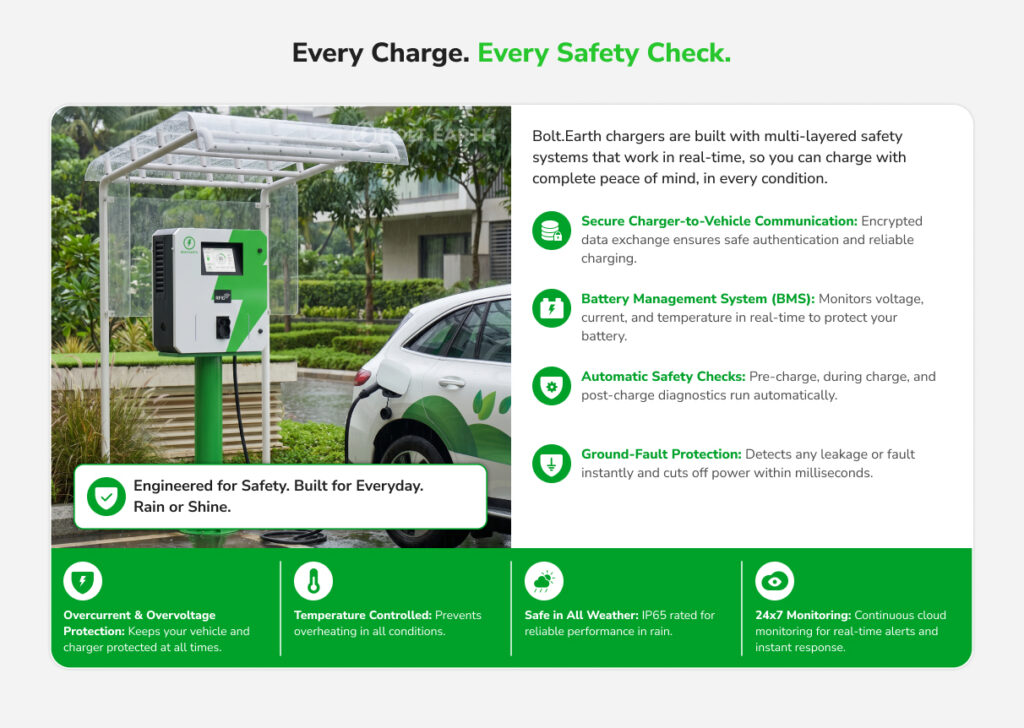
Yes, certified EV chargers are designed to be used in rain, as long as rain hasn’t led to flooding.
EVs and chargers don’t start pumping power the moment you plug in. First, the charger and vehicle “talk” to each other: verifying the connection and running safety checks (IEC 61851 and AIS-138 standards). Only once everything is confirmed safe does charging begin. Even in rain, this communication and built-in protections keep both you and your vehicle secure.
EV chargers are also weatherproof by design. As the NITI Aayog e-AMRIT portal explains, charging cables and connectors are waterproof, and charging stations are built to protect both the vehicle and driver from electrical shock. They undergo rigorous testing and must meet strict standards before being deployed.
In practice, this means charging your EV in light or moderate rain is safe, as long as the equipment is intact and working properly.
Are Modern EV Chargers Designed for Monsoon
Chargers are built for outdoors. Several layers of engineering ensure that rain doesn’t turn the charger into a hazard:
- IP-Rated Enclosures:
Both chargers and EV batteries use high Ingress Protection (IP) ratings. A typical EV battery is sealed to IP65–IP67. Chargers often meet IP54 or higher. So, rain and splashes are safe, but submersion is beyond the design. - Waterproof Connectors:
The plugs (charging guns) have rubber seals or flaps that keep water out. As a precaution, wipe plugs dry before use.
- Automatic Safety “Handshake”:
Before delivering power, the charger and vehicle exchange a secure communication (ISO/IEC 15118) to verify that the plug is fully inserted and that the car is ready for charge. If the connector is not fully connected, or if rain caused an anomaly, the system would not start or immediately shut off.
- Ground-Fault Protection (RCCB):
All certified EV chargers include a Residual Current Circuit Breaker (RCCB, also called RCD). This device instantly cuts off power if current leaks occurs. The RCCB is tuned to trip within milliseconds if it detects even a small leakage (typically 30mA). This is similar to the safety shutoff in ground-fault circuit interrupters (GFCIs) used in wet-area outlets.
- Battery Management System (BMS):
The EV’s BMS constantly monitors battery cells’ voltage, current, and temperature. If the BMS detects any anomaly (such as moisture ingress or an internal short), it isolates the battery pack and halts charging. In short, even if water somehow reaches the battery casing, the system is built to shut down safely.
Together, these features make everyday rain charging safe.
EV Charging at Home During the Monsoon
- Independent Houses and Garages
- Dedicated Circuit:
Your EV charger should run on a dedicated circuit (IS 732:2019 rules) with both an MCB and RCCB. That ensures overloads or leakages trip instantly, isolating the charger like a separate appliance.
- Earthing/Grounding:
Proper earthing for all EV chargers is mandatory under Indian regulation. It provides a safe path for fault currents, so if water causes a leak, the RCCB trips instead of putting you at risk.
- No Extension Cords:
Never use extension boards or adapters. They aren’t rated for EV loads, can drop voltage, and are not waterproof. Under IS 732 rules and CEA guidelines, using an extension or adapter is outright unsafe and non-compliant. Fixed wiring from the breaker to the charger is the only safe option.
- Location Considerations:
- If possible, mount the charger under a canopy to limit direct rain exposure.
- Ensure the cable and connectors do not lie in puddles. Keep the cable coiled so it doesn’t soak. (One practical tip: some owners loosely bag the plug when charging in heavy rain, though the port itself is waterproof.)
- Always use a weatherproof enclosure if the charger is outdoors.
- Maintenance:
Before monsoon season, have a qualified electrician inspect wiring and seal junction boxes. Replace cracked insulation or loose connections immediately.
- Apartment/Condominium Parking
Charging in apartment buildings involves shared spaces and shared infrastructure, so a few extra steps are essential:
- Load & Approval:
Most apartments weren’t originally wired for EVs. Before installation,
- get a written NOC from the housing society,
- if required, work with your utility for a load study or upgrade.
Under CEA safety norms, the building’s sanctioned load may need review before adding chargers.
- Billing and Agreements:
Societies often require clear billing arrangements whether through individual meters, vouchers, or shared systems. Technically, each charger needs its own protected circuit.
- Old Wiring Risks:
Older buildings with thin or un-earthed wiring pose overheating and fire hazards. If your panel uses fuse-type breakers or lacks proper earthing, upgrade it before installing a charger.
- Practical Steps:
Wherever you mount a charger in the parking:
- Mount chargers off the ground.
- Use IP-rated, weatherproof gear.
- Label breakers so neighbors can shut them off in emergencies.
- Even in covered parking, watch for leaks or drips that could pool around the charger.
With the right setup, apartment EV charging during monsoons is safe. Keep the electricity system dry, use dedicated circuits, earthing, certified hardware, and common sense.
Explore EV chargers for your apartment parking.
Using Public Charging Stations During Rain
Public and workplace chargers (both AC and DC fast) are designed for all-weather use. Still, a few precautions make charging safer during the monsoons:
- Outdoor-Ready Equipment:
Most public chargers are IP-rated and often installed under canopies. They’re engineered to work in rain, and operators maintain them regularly. The safety “handshake” (IS 15118 protocol) runs automatically when you plug in. In normal rain, just connecting your EV triggers these safety checks, and the system handles it.
- Quick Inspection:
Before using, always do a quick visual check. Make sure the charger cabinet isn’t standing in water or visibly damaged. The charger should not show cracks or exposed wires. If you see water pooling at the base of the unit, wait for staff to confirm it’s safe.
- Connector Care:
Charging guns may get wet if left on hooks during heavy rain. Wipe them dry before plugging in and always handle with dry hands. If any moisture is inside the car’s inlet or charger plug, stop and report it.
- Stay Clear of Puddles:
You can charge while it’s raining, but don’t stand in water while doing so. If the ground is soaked or flooding is imminent, it’s safer to wait until conditions improve.
- Report Issues:
If a charger sparks, trips repeatedly, or makes unusual sounds, don’t use it. Instead, note its ID and report it to the operator.
Treat public chargers like any other outdoor electrical appliance: safe to use in rain, but only when everything looks intact and dry.
What Changes During Heavy Rain or Flooding?
When the monsoon intensifies, it’s important to separate what’s safe from what’s not:
Key point: Rain itself isn’t the danger, but water in the wrong places is. If floodwater reaches your charging unit, switch it off immediately, and dry it. Never charge when connectors, wiring, or equipment are submerged.
Common Monsoon Myths About EV Charging
These myths often come from confusing EVs with household wiring. With protections like grounding, RCCB, IP seals, and BMS monitoring, charging your EV in rain is nothing like plugging a lamp into a wet socket.
Monsoon EV Charging Checklist
Before plugging in during the rain, keep these essentials in mind:
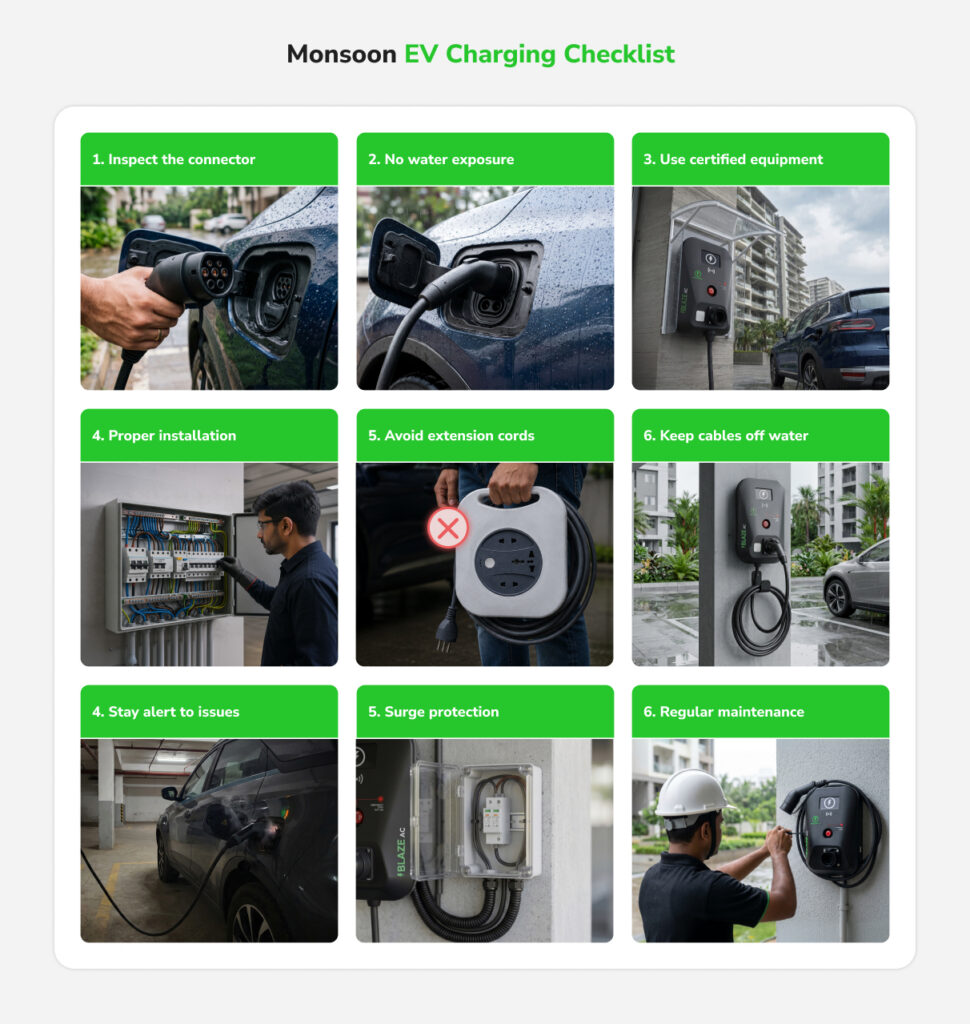
- Inspect the connector: Make sure the charging gun and car inlet are dry and undamaged. Wipe off any moisture before use.
- Avoid water exposure: Never charge if the outlet, plug, or unit is underwater. Chargers should never be submerged.
- Use certified equipment: Stick to BIS/IS 17017-certified chargers and cables. Knock-offs may lack critical safety features.
- Check installation: Your home charger must have its own MCB+RCCB and proper earth. Wiring should be intact with no cracks or exposed parts.
- Avoid extension cords: Always use fixed wiring. Extensions and adapters are non-compliant and unsafe.
- Keep cables dry: Coil or hang cables, so they don’t sit in puddles.
- Stay alert: Stop charging immediately if you notice sparks, burning smells, damaged insulation, or unusual sounds.
- Add surge protection: A surge device on the circuit can safeguard against lightning or grid spikes.
- Regular maintenance: Clean connectors and schedule an annual inspection by a qualified electrician, especially after heavy rains.
This checklist helps you make the most of your EV’s built-in protections. When in doubt, pause charging until conditions are dry; monsoon is seasonal, but safety is year-round.
Final Thoughts
Charging your EV during India’s monsoon season is safe when done correctly. Modern EVs and chargers are engineered for the weather: they use high IP-rated seals, earth-fault detectors, and automatic cutoffs to prevent current from ever reaching puddles or the user. You won’t risk electrocution unless the equipment is faulty or submerged.
The key is to treat EV charging like any outdoor electrical appliance. Use certified, weatherproof hardware; install it on a dedicated, earthed circuit with RCCB protection; keep connectors clean and dry; and never charge in flooding conditions.

Frequently Asked Questions
What if rain falls directly into the charging port while I’m plugging in?
Modern EV charging ports are designed to handle rain. The connector stays inactive until it securely connects with the vehicle, so there’s no live electricity while plugging in.
Tip:
If it’s raining heavily, point the charging plug downward while inserting it or use an umbrella or charging port cover to keep excess water out.
Can I use a regular extension cord to charge my EV outside in the rain? ?
No. Regular household extension cords are not designed for EV charging or wet weather.
Tip:
Always use the manufacturer’s charging cable connected directly to a dedicated EV charger. This reduces the risk of electrical faults and ensures safe charging.
Is it safe to charge my EV during a thunderstorm?
Charging is generally safe because EV chargers like Bolt.Earth’s have built-in grounding and safety features. However, lightning can cause power surges.
Tip:
If there’s severe lightning nearby, it’s better to wait until the storm passes before charging.
Can I leave my EV plugged in overnight if heavy rain or flooding is expected?
Yes, during normal rain. But if flooding is expected, unplug the vehicle.
Tip:
If water could reach the charger or the lower part of your vehicle, disconnect it and move the car to higher ground before flooding begins.
What if my charging cable is lying in a puddle while charging?
Certified EV charging cables are weather-resistant and can handle wet conditions. However, they shouldn’t stay submerged in standing water for long.
Tip:
A wet cable is usually fine, but if it’s completely submerged, unplug it safely once conditions are dry and move it to a dry spot.

Oct 13, 2026 • EV Charging Infrastructure
Portable EV Charger, EV Wall Box Charger, Fast Charging: What They Are and What Makes Sense for You
Read More
Sep 30, 2026 • EV Charging Infrastructure
EV Charger Buying Checklist: Everything to Compare Before You Purchase
Read More
Sep 11, 2026 • EV Charging Infrastructure
Charging During Power Cuts: What Actually Happens and How to Plan Ahead
Read More