Delhi’s EV Policy 2026: Incentives, Infrastructure and Impact

Surupasree Sarmmah
Manager-Content Editor
Published on:
05 Feb, 2026
Updated on:
16 Apr, 2026

Overview of the Policy (Scope, Targets, Timeframe)
Delhi’s EV policy, originally notified in 2020, has been extended through March 2026-2030. The government aims to position Delhi as a leader in electric mobility. The 2020 policy set ambitious goals, such as EVs accounting for 25% of all new vehicle registrations by 2024. While timelines shifted, the extension continues the original incentives and targets. In July 2025, officials confirmed the extension until March 31, 2026, reaffirming Delhi’s commitment to electrification and even setting long-term stretch goals of 100% EV adoption (over a few years) in select vehicle segments.

This blog examines Delhi’s EV Policy across three key dimensions:
- Incentives and regulatory support across vehicle segments
- Charging infrastructure strategy for widespread accessibility
- On-ground impact, implementation challenges, adoption trends, and governance learnings
Incentives and Mandates by Vehicle Type
Delhi’s EV Policy 2026-2030 offers phased incentives and clear mandates across vehicle types.
Electric Two-Wheelers
For electric two-wheelers, incentives apply to models priced up to ₹2.25 lakh (linked to battery capacity and will reduce over three years. Subsidies start at ₹10,000/kWh (year 1, capped at ₹30,000), tapering to ₹6,600/kWh (Year 2, capped at ₹20,000) and ₹3,300/kWh (Year 3, capped at ₹10,000).
A scrappage incentive is proposed at ₹10,000 for turning in an old petrol or CNG scooter to buy an EV. The policy mandates that no new petrol two-wheelers be registered from April 1, 2028.
Electric Three-Wheelers
For electric three-wheelers (auto-rickshaws), the incentives are now phased at ₹50,000 in Year 1, ₹40,000 in Year 2, and ₹30,000 in Year 3.
A ₹25,000 scrappage incentive is proposed for old CNG autos. The policy mandates that only electric three-wheelers are allowed for new registrations from January 1, 2027.
Electric Goods Vehicles
For N1 category electric goods vehicles up to 3.5 tonnes, the policy incentives are ₹1 lakh in year 1, ₹75,000 in year 2, and ₹50,000 in year 3. A scrappage incentive of ₹50,000 is proposed for e-goods vehicles.
Electric Four-Wheelers
According to the policy, all electric four-wheelers priced up to 30 lakh can enjoy 100% waiver of road tax and registration fees until March 31, 2030. A scrappage incentive of ₹1 lakh is proposed for scrapping BS-IV or older car (limited to the first 1 lakh buyers). Strong hybrid cars priced up to ₹30 lakh will get 50% reduction in road tax and registration fees, but no scrappage incentives.
Support for Charging Infrastructure

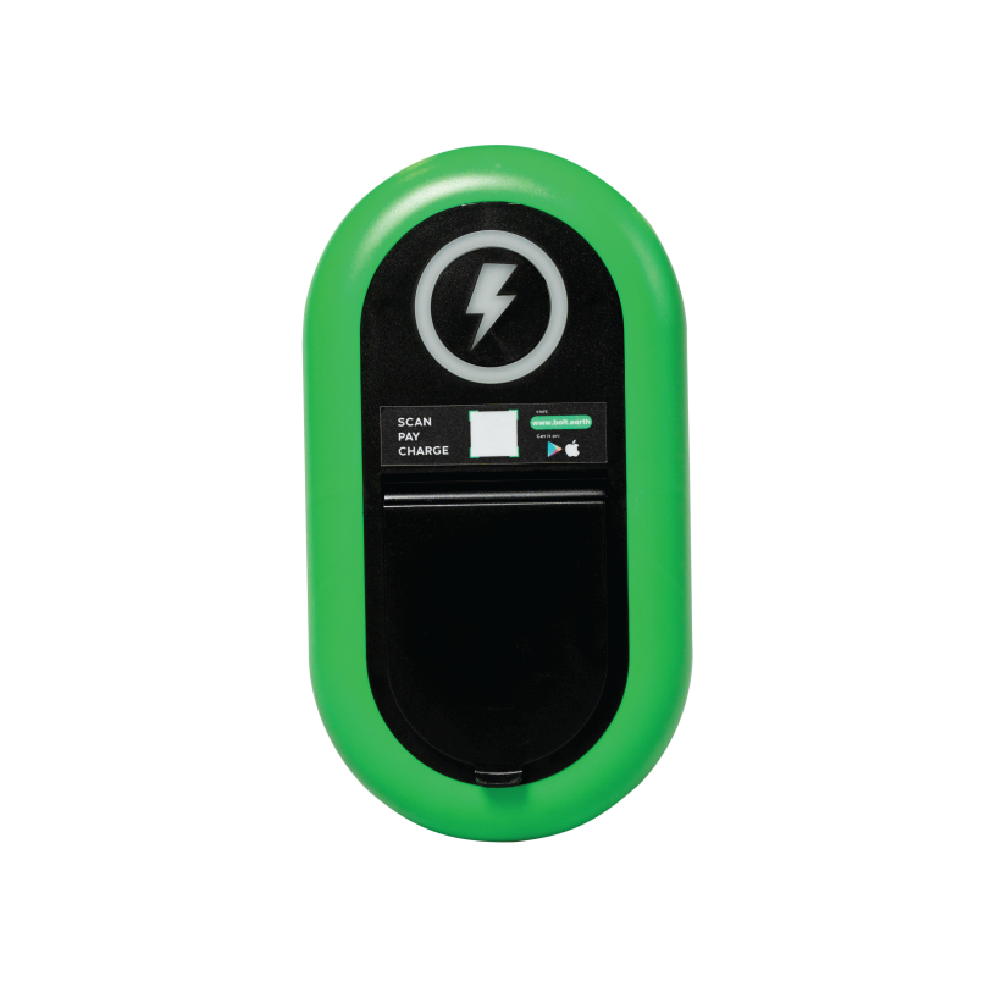
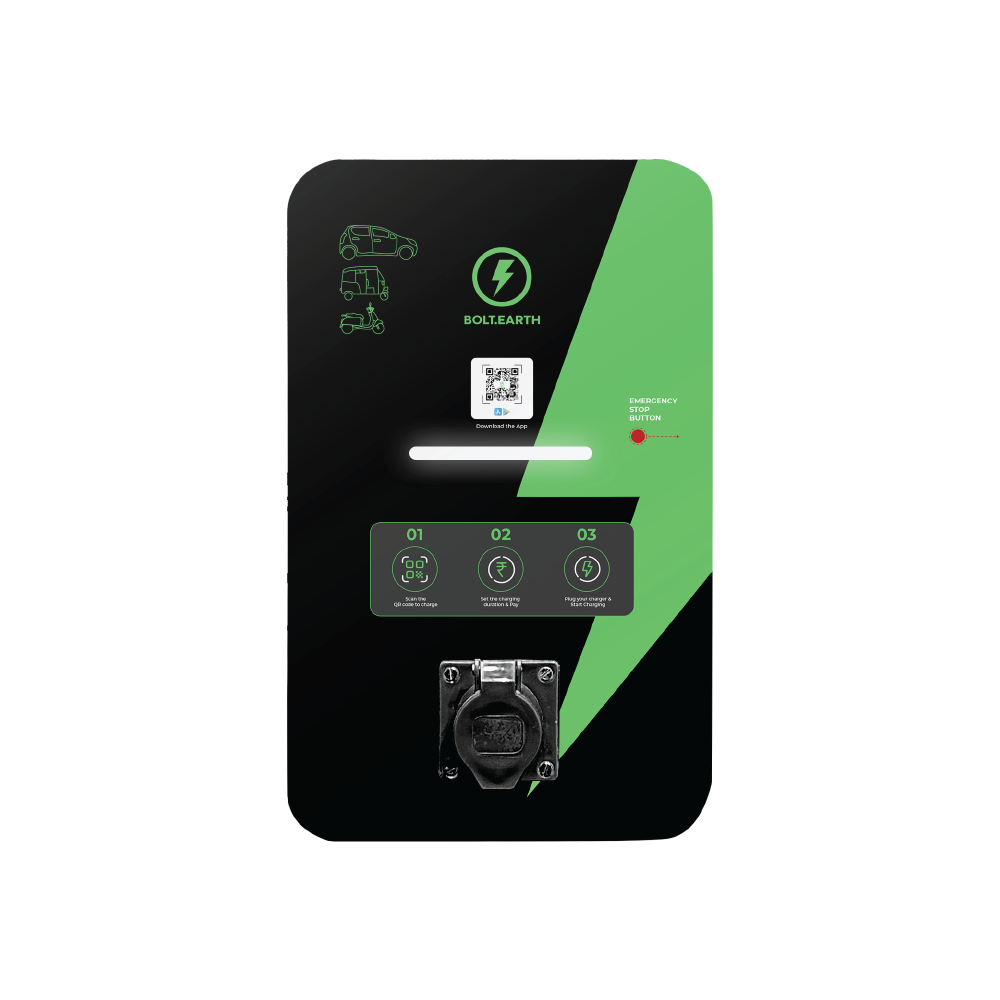
Delhi’s policy prioritizes charging accessibility, aiming for a public charging facility within 3 km of any location. The EV Charging Infrastructure Action Plan (2022–25) is committed to tens of thousands of chargers. For example, one report noted Delhi already has approximately 2,452 public charging points and 234 battery-swap stations. By early 2026, the network had expanded to 9,000 public charging stations, with a target of 30,000 in the coming years.
To facilitate rollout, Delhi offers subsidies and amenities for charger installation and concessional land in public parking for private charging operators and explicitly subsidizes charger installation costs. Battery-swapping stations receive additional support, including 100% reimbursement of state GST on advanced batteries. Regulations mandate EV-ready infrastructure in new buildings, requiring 20% of parking spaces to be equipped with power conduits for chargers. The government is also working to lower electricity tariffs for EV charging, ensuring affordability and widespread adoption.
Mandates & Public Fleets Electrification
Delhi has used mandates and fleet procurement to drive EV demand. The policy directs the city to take the lead by greening its own fleet. All leased or hired government cars are to be converted to EVs within 12 months of the policy’s issue. The city has aggressively expanded its e-bus fleet, operating 3,535 electric buses out of 5,335 total by early 2026. Under the PM E-Drive program, Delhi is procuring 2,800 e-buses in Phase-1 (bringing the fleet to ~10,430) and has requested another 3,330 e-buses in Phase-2. The target is to reach 7,500 electric buses by the end of 2026 and 11,000 by 2028. From January 1, 2026, no new ICE vehicles will be allowed in aggregator-based operations, and existing BS-VI two-wheelers can operate only until December 31, 2026.
Delhi’s public transport electrification is illustrated by the image below (a NUEGO electric bus that recently entered service). These e-buses, covering major routes and last-mile feeders, not only cut pollution but also set up a model for other cities. Similarly, Delhi’s auto-rickshaw sector is targeted: the government planned to phase out all CNG auto-rickshaws by 2025 in favor of e-autos (though that was deferred in the latest policy draft). Delivery and ride-hailing platforms are being urged to switch to e-2Ws and cabs, leveraging Delhi’s incentives to accelerate the transition. The overall aim is clear: public fleets, city vehicles, and even paratransit services must lead the EV transition, multiplying the impact of subsidies and demonstrating new technology on the roads.
Policy Impact: EV Registrations, Sales and Charging Growth

Delhi has emerged as one of India’s top EV markets. A government data summary for 2025 showed the city with an EV-to-ICE ratio of approximately 14%, meaning roughly 1 in 7 new vehicles registered were electric, compared to the national average of 8%. One analysis found Delhi’s EV share second only to Kerala’s in recent quarters. Since 2020, Delhi has registered over 86,000 EVs, with strong uptake in two-wheelers and three-wheelers and growing adoption of electric cars. Charging infrastructure has expanded rapidly, from a few hundred points in 2020 to approximately 9,000 by 2026. Fast-charging hubs are being set up at transit centers, parking lots, and metro stations, reducing range anxiety and supporting adoption.
In sum, the policy’s impact data suggest Delhi is outperforming older state goals: it already meets or exceeds interim targets (e.g., 10% EV share in sales, as Transport Minister Gahlot noted on the action plan launch) and is on track to meet the policy’s major aims.
Implementation and Governance
To implement the EV policy, the Transport Department of Delhi is the nodal agency. The policy mandates the creation of a dedicated EV Cell within Transport Delhi, staffed with technical experts to coordinate implementation. A State Electric Vehicle Board oversees the strategy and reviews progress. Funding comes from several sources: the city has ring-fenced its Air Ambience Fund (pollution fines and related revenues) to subsidize EVs.
New pollution-related charges (e.g., additional road tax on high-emission vehicles, congestion fees on cabs) were explicitly earmarked to refill the EV fund. Furthermore, all central FAME subsidies (for eligible vehicles) are redirected through Delhi’s scheme, and pending grants from the earlier Air Ambience Fund are being cleared by the transport department. Practically, subsidy payments have been a challenge: previous governments had accrued backlogs of incentive claims, which current authorities have promised to clear.
For outreach and oversight, Delhi’s EV policy calls for public awareness campaigns and periodic policy reviews. The government tracks key metrics such as EV registrations, charger installations, pollution levels, and adjusts rules accordingly. By late 2025, a high-level committee including officials and experts was finalizing the next EV policy draft based on these results. Notably, Delhi has begun preparing policy “2.0” for implementation from FY2027 onward, reflecting lessons learned. For example, strengthening subsidy disbursal, incorporating a scrappage scheme, and even opening an “open database” of charging points.
Challenges & Policy Adaptations
Despite a strong vision, Delhi’s EV push has faced hurdles. One persistent issue was implementation delays: many buyers complained that promised subsidies took months to arrive, causing confusion and frustration. The new government pledged to streamline this by issuing “purchase stickers” for vetted buyers and automating claims. Infrastructure siting also posed challenges (hence the concessional location policy), as land in Delhi is scarce.
Safety and regulatory clarity have been emerging issues: for example, Delhi’s plan to incentivize retrofitting old cars (at ₹50,000 per conversion) sparked industry debate in 2026, with automakers citing safety concerns. Policymakers note that while retrofits could help remove old polluting vehicles, the approach needs stricter standards to address those concerns.
Air quality requirements have also pressured timelines. Delhi’s Supreme Court-mandated bans on older vehicles (petrol >15 years, diesel >10 years) mean many owners will either scrap or convert their ICE cars. The EV policy now dovetails with these rules: for instance, scrappage incentives were introduced so that owners of banned vehicles get a bonus to switch to EVs. To address e-waste and battery recycling, Delhi has started drafting rules (and even offering battery swapping trials). Each year’s budget or policy tweak has added new elements —e.g., doubling swap station incentives and adding interest subvention for loans. These adaptations show Delhi continuously refining its framework based on feedback from industry and civil society.
Delhi in Context: National Goals and Lessons for Others
Delhi’s EV penetration (14% in 2025) is among the highest nationwide, reflecting both strong policy incentives and people’s willingness to adopt new tech. The city also ranks second in public charging infrastructure after Maharashtra. Its aggressive charger-to-EV ratio target of 1:15 surpasses many state norms. Politically, Delhi’s leaders have extended and expanded the policy, signaling consensus on EVs as a solution to Delhi’s notorious air pollution.
However, Delhi’s fiscal constraints and land scarcity differ from those of larger states. Some states like Maharashtra and Karnataka have more generous budgets and industrial bases, and their targets can be even more ambitious (e.g., Maharashtra’s goal of 10% EV share in new sales by 2025 and Karnataka’s plan to electrify 100% of small cargo vehicles by 2030). Nationally, the EV mission also involves central incentives (FAME, tax breaks) that Delhi complements with its own schemes.
Other cities can learn from Delhi’s integrated approach: combining purchase subsidies, charging network planning plus fleet mandates creates synergies. For instance, Delhi’s experience shows how important it is to waive road taxes and to involve local electricity regulators in tariff design. The capital’s efforts at single-window approvals and public data dashboards could be models for other cities.
Final Thoughts
Delhi’s current EV policy 2026 is a comprehensive program anchored on clear targets and generous incentives. It has driven measurable growth in EV adoption and infrastructure in the last two years, and the government has demonstrated political will to refine the policy further. While challenges remain, from execution bottlenecks to new tech issues like retrofitting, Delhi’s strategy offers valuable lessons. It shows that even a dense, high-pollution city can accelerate EV uptake through decisive policy, and that continual adaptation (as seen in Delhi’s upcoming “EV Policy 2.0”) is key to staying on track. Other states and cities seeking to ramp up EVs can study Delhi’s incentives, its public charging push, and its proactive fleet electrification, while also being mindful of Delhi’s unique context (cost of living, congestion, etc.) when replicating its approach.

Frequently Asked Questions
Which vehicle segments benefit most from Delhi’s EV incentives?
Two-wheelers and three-wheelers benefit the most. High per-kWh subsidies, scrappage incentives, interest support, and permit flexibility make EVs significantly cheaper than ICE alternatives in these segments. Commercial fleets and last-mile delivery vehicles are also heavily targeted.
Are EV buyers in Delhi exempt from road tax and registration fees?
Yes. All EVs registered in Delhi receive a 100% waiver on road tax and registration fees, regardless of vehicle category. This remains one of the most impactful non-cash incentives in the policy.
Has Delhi’s EV policy actually increased EV adoption?
Yes. Delhi has one of the highest EV penetration rates in India, with EVs accounting for roughly 14% of new vehicle registrations in 2025, well above the national average. Charging infrastructure has expanded from a few hundred points in 2020 to thousands today.